
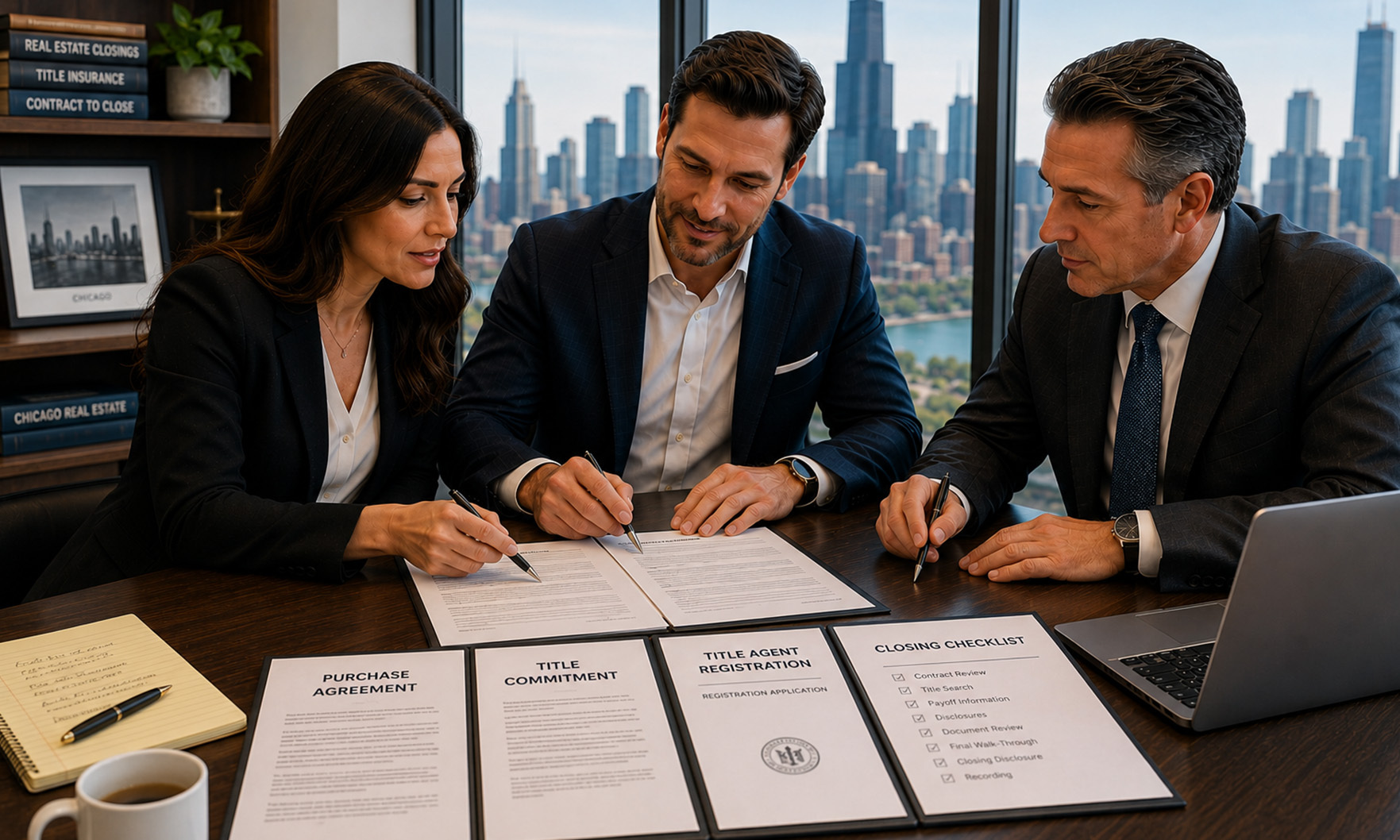
Last month, we introduced a concept many Chicago agents haven’t been shown — earning additional income by participating in the title side of their own transactions.
So how does it actually work?
At a high level, this isn’t about changing your role.
It’s about expanding it.
Instead of stepping away after opening title, the agent stays involved in another part of the transaction they already control.
- It starts with the listing
This model is built around listing agents. In Illinois, the seller typically has the right to choose the title company, which creates the opportunity to be involved on that side of the deal.
- The agent participates in the title process
Rather than handing the file off completely, the agent takes on a defined role. This includes reviewing documents, coordinating information and helping move the file toward closing alongside the title team.
This is not a referral.
It’s work-based participation.
In many cases, agents are already coordinating much of the information and communication needed to move a file toward closing. The difference is that they now have a defined role in the title process and are compensated for that work.
- Compensation happens at closing
Because the agent contributes to the title side of the transaction, they can be compensated for that work.
That creates the opportunity for a second check at closing.
Now let’s address the questions most agents have right away.
Is this allowed?
Do I need another license?
What am I actually responsible for?
The short answer is that it’s permitted when structured properly and no additional license is required — only an approved registration.
In Illinois, agents can operate as Registered Title Agents within a structure supported by a licensed title insurance underwriter. The role is clearly defined, and compensation is tied to actual work performed on the file. The model is structured to comply with both RESPA and the Illinois Title Insurance Act.
So what does that work look like?
In practice, it’s focused.
Most agents describe it as a couple of extra hours per transaction. The work includes reviewing key documents, coordinating information and staying engaged in the file as it moves toward closing.
The title company continues to handle the technical side of the process, including title search ordering, clearance coordination, underwriting review and closing coordination.
The attorney continues to handle the legal aspects of the transaction, including attorney review, inspection-related matters, contract modifications, legal advice and document preparation. The Title Agent role is designed to complement — not replace — the attorney’s role in the transaction.
Is it manageable day-to-day?
With the right systems in place, the workflow is straightforward. Platforms like Qualia and DocuSign keep everything organized, transparent and easy to track.
What does it take to get started?
The onboarding process is straightforward. There are no upfront fees and no state-required classes. Agents are guided through registration and supported through their first few transactions until the process becomes familiar.
While Illinois does not require continuing education for Registered Title Agents, ongoing training remains important. To support agents in the field, we are launching @ Home Title University, an on-demand training platform focused on real-world transactions and best practices.
There’s also a common question behind all of this.
What’s the catch?
There isn’t one in the way most agents expect.
And just as important, this is not passive.
It’s not a referral fee.
It’s not a side business.
It’s simply a more active role in a transaction you already control.
For agents with consistent listings, the impact is straightforward.
Instead of relying on more deals to increase income, they’re increasing what each deal is worth.
👉 See how the Title Agent model works:
Edward Gal is the founder and CEO of At Home Title Services and owner of At Home Realty Group. A licensed Illinois Managing Broker since 2000, he has closed more than 5,000 real estate transactions, completed over 500 residential investment projects, and remains actively involved in brokerage, title, and real estate investment operations throughout Chicagoland.