
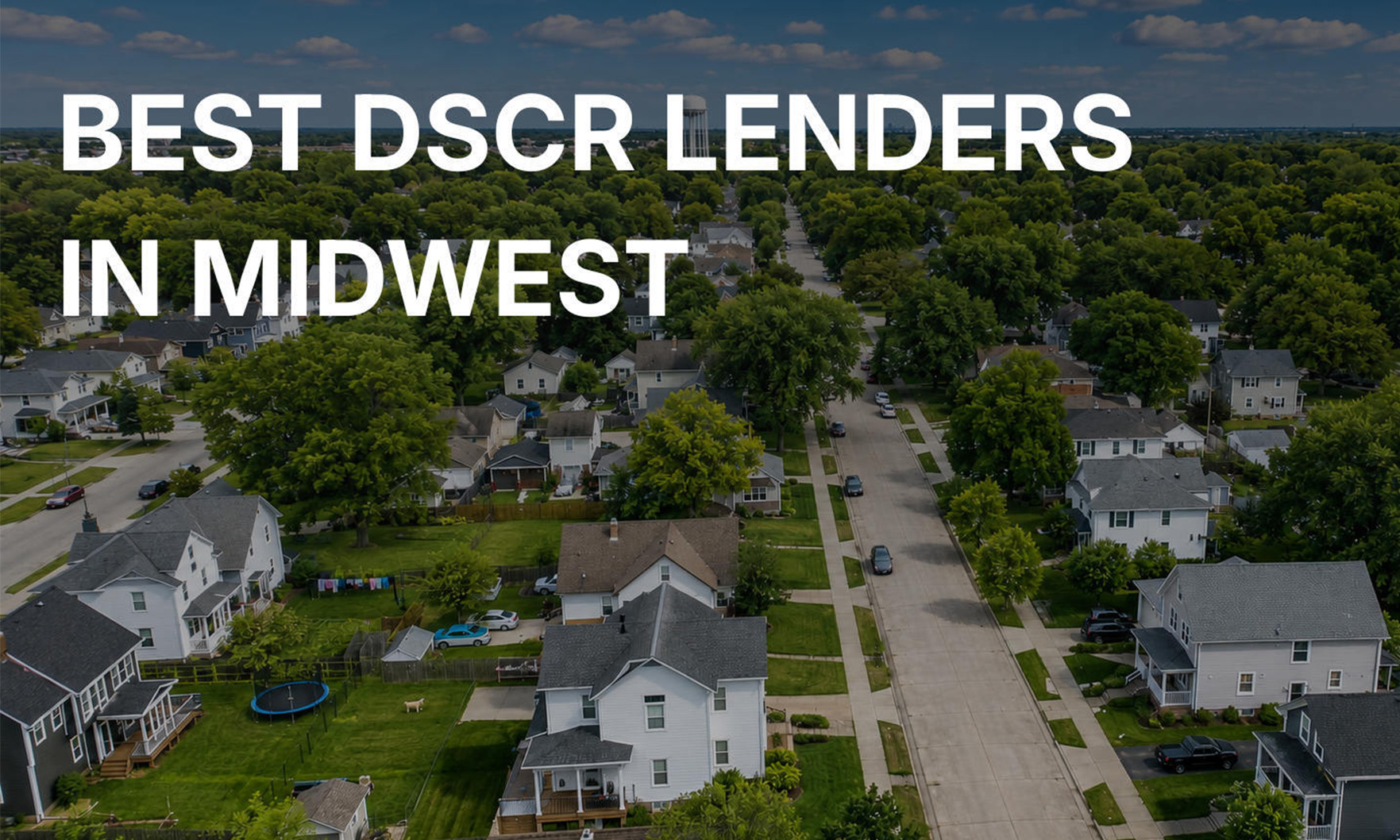
The Midwest investment case rests on yield, affordability and demand stability that coastal markets have not produced in over a decade. Entry prices across Wisconsin, Indiana, Ohio and Minnesota remain well below national averages, and rent-to-price ratios support debt service coverage ratio (DSCR) qualification across a wide range of property types. The demand base, anchored by major universities, healthcare systems and manufacturing employment, holds through economic cycles in ways that single-industry markets do not. Eleven of the top 30 most in-demand rental markets in the country sit in this region in 2026, and the affordability gap is widening as investors redirect capital toward markets where the monthly math actually works. For agents who work with investor clients across the Midwest, the financing question is consistent: DSCR loans are how portfolio investors here scale, because they qualify on property income, support LLC ownership and carry none of the portfolio caps that conventional lenders impose.
Before comparing available lending programs, here is how DSCR qualification works and what investors need to have in place before applying for financing.
What is a DSCR loan?
A DSCR loan qualifies on the property’s rental income rather than the borrower’s personal income, tax returns or employment history. The ratio divides gross monthly rental income by total monthly debt obligations, including principal, interest, taxes, insurance and any applicable HOA dues (PITIA). A ratio at or above 1.0 means the property covers its debt. These loans carry 30-year terms, support LLC ownership and typically close in 21 to 25 days.
DSCR loan requirements
Understanding the qualification checklist before approaching a lender saves time and avoids surprises at underwriting. Most DSCR programs in 2026 require the following:
DSCR ratio of 1.0 or above. The property’s monthly rental income must cover total PITIA. A ratio of 1.25 or higher typically unlocks better pricing and higher loan to value LTV. Some specialty programs accept ratios as low as 0.75, but those come with larger down payment requirements and premium rates.
Minimum credit score of 660. Most standard programs set a floor at 660, with borrowers above 700 accessing better terms. Some programs accept scores in the 620 to 640 range with compensating factors.
Down payment of 20 to 25%. Most programs finance up to 80% LTV on purchases. Cash-out refinances typically allow up to 75% LTV. Short-term rental properties and lower DSCR ratios may require 25% or more.
Reserves of three to six months of PITIA. Reserves must be held in liquid accounts after the down payment and closing costs are paid. Portfolio investors with multiple financed properties should plan for reserve requirements that scale across their holdings.
Rent-ready property condition. The property must be in livable, rentable condition at appraisal. Properties with deferred maintenance, unfinished work or non-functioning systems will not pass inspection. Investors who submit before stabilization risk losing the rate lock or the deal.
Best DSCR lenders in the Midwest
1. Ridge Street Capital
Specialty: DSCR loans for long-term and short-term rental investors across the Midwest
Ridge Street Capital is a national direct private lender with dedicated DSCR loan programs in Wisconsin and Indiana, two of the region’s most active rental markets in 2026. Their program covers purchases, rate-term refinances and cash-out refinances across long-term rentals and short-term rental properties, including Airbnb. For Wisconsin investors acquiring in Door County, the Northwoods or lake country markets, Ridge Street uses AirDNA market data to underwrite properties with no existing rental history, producing a qualifying income figure based on actual STR market performance rather than a long-term lease estimate.
The loan minimum starts at $55,000, which serves the affordable single-family and duplex inventory across Milwaukee, Fort Wayne and South Bend, where quality rental properties regularly fall below the $100,000 threshold that eliminates most competing programs. Origination fees start at 0%, term sheets come back the same day and the program closes in 21 to 25 business days. LLC and individual ownership are both supported.
Best for: Buy-and-hold, long-term rental, short-term rental (Airbnb)m and small multifamily investors, from first-time buyers to experienced portfolio builders scaling across the Midwest.
2. Renovo Financial
Specialty: Private lender focused on fix-and-flip, bridge financing and stabilized rental loans for Midwest investors
Renovo Financial is a Chicago-based private lender operating exclusively in residential investment property financing. DSCR rental loans cover both single-family and multifamily properties on 30-year fixed or adjustable-rate mortgage structures, with interest-only and fully amortizing options available on both. The single-family program covers one- to four-unit properties from $100,000 to $3 million and is available for purchases and cash-out refinances. The multifamily program extends up to 30 units with loan amounts from $250,000 to $3 million on the same term menu.
Best for: investors managing value-add projects who want to transition stabilized properties into long-term DSCR financing and multifamily investors targeting assets above four units
3. Newfi Lending
Specialty: National non-qualifying mortgage (QM) lender offering conventional, DSCR and investor financing across multiple loan product categories
Newfi Lending is a national non-QM mortgage lender offering conventional, FHA, VA, jumbo, bank statement and DSCR loan products for both homeowners and real estate investors. The company’s DSCR program covers one- to four-unit residential investment properties, including single-family homes, condos, townhomes and small multifamily. A notable program feature is Newfi’s acceptance of qualifying cryptocurrency assets to satisfy reserve requirements, which benefits investors who hold digital assets alongside real estate holdings and prefer not to liquidate those positions to meet post-closing reserve documentation.
Best for: Investors with non-traditional asset profiles, including those holding cryptocurrency reserves, who need a national non-QM program with flexible qualification standards.
4. Constitution Lending
Specialty: Direct private lender focused on DSCR rental loans, bridge financing and fix-and-flip investor loans
Constitution Lending is a direct private lender operating in business-purpose financing for real estate investors. Their DSCR program covers loan amounts from $150,000 to $2.5 million. An automated pricing and document portal generates instant quotes and accelerates the application process. Rates starting at 6.75% run slightly above programs offering 0% origination at comparable credit and leverage.
Best for: Midwest investors who want a fully digital application experience with same-day quotes and fast closings through a direct lender.
5. Rental Home Financing
Specialty: Direct investor lender specializing in DSCR rental loans, blanket portfolio loans nand long-term rental financing
Rental Home Financing is a direct investor lender headquartered in Indianapolis with a program portfolio built entirely around rental property investors rather than owner-occupied borrowers. The company offers single-property DSCR loans, blanket loans covering multiple properties under a single financing structure, apartment building loans, short-term rental mortgages and bridge financing. The blanket loan product is the most distinctive offering in the portfolio. Investors assembling multiple rental properties across Wisconsin, Indiana and Ohio who want to consolidate holdings under a single monthly payment rather than managing individual loans on each asset will find this structure operationally efficient.
Best for: Midwest portfolio investors who want to consolidate multiple rental properties under a blanket loan structure or need an investment-focused lender.
The Midwest investment landscape
Wisconsin has emerged as one of the region’s strongest rental investment destinations in 2026. Madison rose 26 spots in PwC’s Emerging Trends rankings, anchored by the University of Wisconsin’s 50,000-student enrollment and a growing biotech and healthcare employment corridor. Green Bay and Appleton rank among the top five up-and-coming rental markets nationally, driven by affordable acquisitions and demand that has absorbed limited new supply. Milwaukee offers entry prices well below Madison, with vacancy rates tracking below the national average and a young renter population driving consistent demand across its revitalizing neighborhoods.
Indiana’s investor-friendly regulatory environment and affordable entry prices have made Indianapolis one of the most active DSCR markets in the region, with median home prices approximately 24% below the national average. Secondary markets like Fort Wayne, South Bend and Evansville regularly produce acquisition prices below $150,000 with rental yields that outperform most metro cores. Indiana’s low property tax burden further improves net cash-on-cash returns for portfolio investors running tight DSCR projections.
Ohio delivers some of the country’s strongest rental yields at current acquisition prices. Columbus combines job growth and DSCR-friendly rent-to-price ratios across its expanding suburban corridors. Cleveland’s rental yields average approximately 9.8% on affordable acquisitions near major healthcare and university anchors. Minnesota’s Twin Cities round out the regional picture with diversified employment and consistent rental demand across suburban entry-point markets.
That said, DSCR program availability varies by state across the Midwest. Not all national lenders are active in every state. Investors should confirm coverage before they run deal projections; applying to a lender who doesn’t serve the state wastes time on both ends.
How to choose a DSCR lender for Midwest investors
Five questions determine whether a lender is genuinely equipped to serve a Midwest rental investor’s deal.
Does the lender underwrite short-term rental income? Not every DSCR program accepts STR income, and those that do handle it differently. Many default to a long-term lease comparable from the appraisal, which routinely understates what a performing Airbnb property earns. For investors targeting Wisconsin’s lake country, Door County or other Midwest vacation rental markets, the lender needs to use projected STR income from current market data rather than a generic rent estimate that has nothing to do with nightly booking performance. Confirm this before running any deal projections on an STR acquisition.
Where does the lender’s minimum DSCR sit? A ratio of 1.0 means the property’s rental income covers its debt payment exactly. Programs requiring 1.25 or above disqualify deals that clear the 1.0 floor elsewhere. In affordable Midwest markets where acquisition prices are low and rents are steady, most deals clear 1.0 comfortably, but investors targeting higher-cost submarkets in Columbus or the Twin Cities should confirm the lender’s threshold before submitting.
What does the financing actually cost? The interest rate is one number. Origination fees are another. Across DSCR programs, origination runs from 0% to 3%. On a $400,000 acquisition common across Ohio and Indiana markets, a 2% origination fee adds $8,000 to the cost of the transaction. Comparing the all-in cost of the deal, rate plus origination, across lenders rather than rate alone produces the accurate picture.
What property types and loan sizes does the program cover? Several national DSCR programs exclude condos, properties above four units or loans below $100,000 to $150,000. In the Midwest, where two-flats in Chicago, small multifamily in Columbus and affordable single-family rentals in secondary Wisconsin and Ohio markets all sit below those thresholds, that eligibility gap eliminates a significant share of available inventory. Confirming property type eligibility and the loan floor before referring a client prevents a mismatch at underwriting that wastes time on both sides of the transaction.
Taken together, the Midwest offers a yield profile that coastal markets cannot produce at comparable entry prices. Agents who understand the financing tools available to Midwest portfolio investors can serve a growing segment of investment buyers who prioritize cash flow over appreciation.