
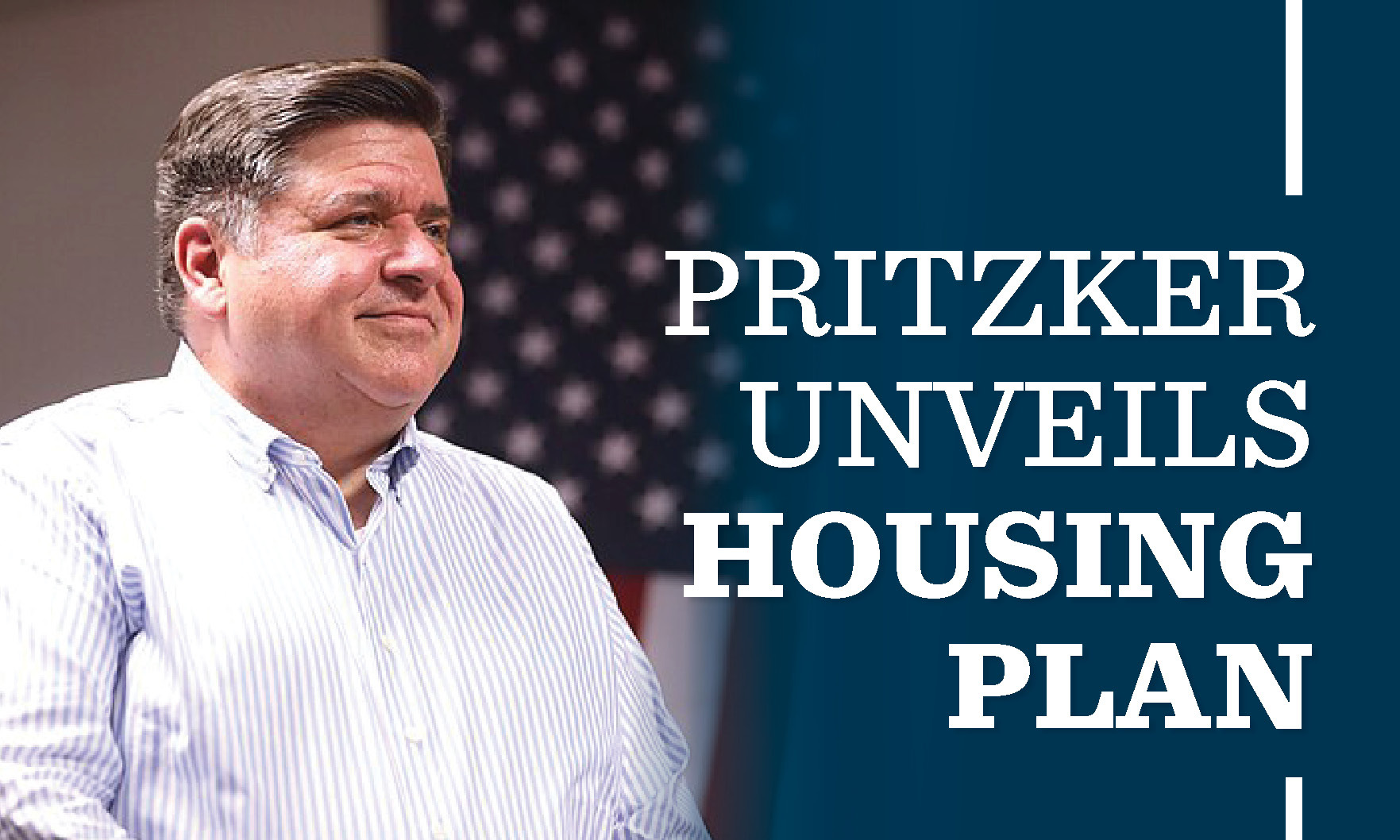
Illinois Governor JB Pritzker proposed a host of initiatives aimed at increasing the state’s housing supply by making it “easier, faster and more cost-effective to build homes in Illinois.”
“This is an ambitious slate of reforms designed to eliminate unnecessary barriers and lower costs for housing construction, produce a wider range of family friendly housing types and streamline construction processes,” Pritzker said at his eighth annual State of the State address to the General Assembly.
“We will enable more unused housing units to be redeveloped and put into service. City by city, town by town, neighborhood by neighborhood, block by block — a little more housing in each area can significantly advance our housing stock.”
The proposal, Building Up Illinois Developments (BUILD), seeks to clear the way for new developments by streamlining zoning laws and legalizing a wider range of housing types, including duplexes, triplexes, four flats and accessory dwelling units (ADUs) or “granny flats”.
The plan also sets aside $250 million in capital investments and grants to support new development and increase homeownership.
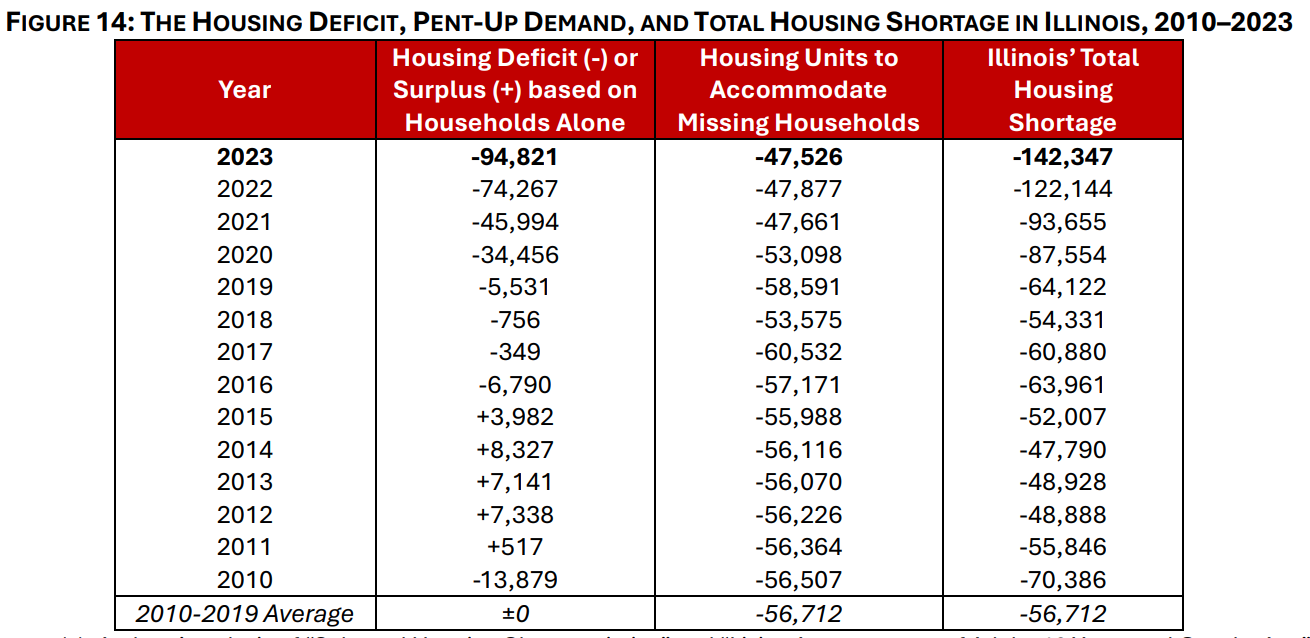
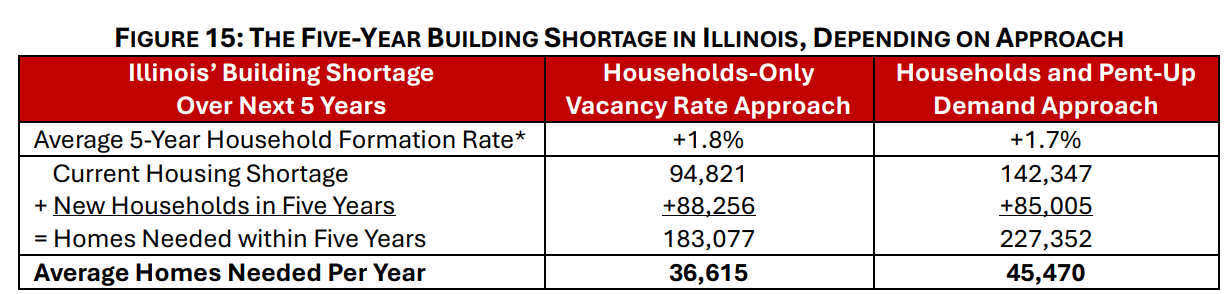
Pritzker noted a 2025 report from the University of Illinois’ Project for Middle Class Renewal, “You Can’t Buy What You Can’t Afford: Illinois’ Housing Shortage and Ways to Fix It,” that found the state is short 142,000 housing units and will need to build over 225,000 new units over the next five years to keep pace with demand.
Source: University of Illinois Project for Middle Class Renewal
Source: University of Illinois Project for Middle Class Renewal
“Removing barriers for homebuilders will attract responsible developers to build in places they have been unwilling to,” Pritzker said. “Reduced regulation, greater financing options, a wider range of small units made available for rent — we can add hundreds of thousands of homes in Illinois with this creative approach. Illinois is up to the task — but it has to start now, here, with us.
Other components of the plan include the standardization of impact fee practices to increase predictability for developers, modernizing building codes to free up space for more housing and reduce costs, removing mandatory parking requirements for new developments within a half a mile of major transit hubs and allowing developers to use qualified third parties to sign off on permits when local delays occur during the permitting process.
The $250 million budgeted will provide $100 million to the Illinois Housing Development Authority (IHDA) to support middle housing construction and $50 million for down-payment assistance for first-time homebuyers. It will also deliver $100 million to the Illinois Department of Commerce and Economic Opportunity to help municipalities remove upfront infrastructure barriers, such as sewer and stormwater improvements, that hold back housing projects.
Illinois REALTORS® applauded the proposals, saying they “mirror the core pillars of Illinois REALTORS®’ legislative platform since 2020.”
The association’s CEO, Jeff Baker, served on Pritzker’s 2024 Ad-Hoc Missing Middle Housing Solutions Committee, which sought to develop initiatives to increase these types of residences. These include smaller, multi-unit properties like townhouses, duplexes and cottage courts that fit into existing single-family neighborhoods better than large-scale apartment developments.
“For the past six years, our members have been the leading voice at the Capitol and in local city and village halls advocating for common-sense solutions to our state’s housing crisis,” he said. “We are pleased to see the governor embrace the roadmap we have proposed — specifically the expansion of ADUs and zoning flexibility for ‘missing middle‘ housing.”
John Gormley, CEO of Mainstreet REALTORS®, said that a “multi-pronged” approach is critical to addressing housing affordability.
“We appreciate that the BUILD proposal is coming at housing affordability from many angles,” Gormley said. “A multi-pronged approach is critical to addressing the huge challenge of housing affordability impacting Chicagoland and other similar metro areas all over the country. However, at Mainstreet REALTORS®, we’re particularly excited about Governor Pritzker’s promised improvements to zoning flexibility. In many of our communities, outdated zoning regulations have really constrained growth. Allowing more housing types, especially ‘missing middle’ options like duplexes and accessory units, will unlock many new possibilities. If we want more inventory, we have to make it easier to build and zone properties for creative residential use.”
Gormley went on to say that Pritzker’s plan is aligned with Mainstreet’s belief in the “fundamental right” of all people to own property.
“While no single policy will solve Chicagoland’s housing affordability problem overnight, reforms like the ones proposed by Governor Pritzker, which responsibly expand housing options, can absolutely make a measurable difference over time,” Gormley said. “The Governor’s plan is well-aligned with Mainstreet REALTORS®’ belief in the fundamental right of all people to own property, and with the work we’re doing daily to educate our members about how they can help their clients find and secure affordable housing. It is also supportive of the legislative priorities our state association, Illinois REALTORS®, has long been focused on. We urge the governor to make sure his plan prioritizes those who have historically had the most difficulty affording homes in Chicagoland, including first-time homebuyers, immigrants and people of color.”
Great to see a strong focus on increasing housing supply. This could really help improve affordability.
This sounds like a positive step toward solving the housing shortage. Hope it’s implemented quickly.
This could make a big difference if executed properly. Looking forward to the results.
Support for first-time buyers is a very important move. Many people will benefit from this.
Is this plan for legal citizens to own? Seriously question.
Money without change changes nothing. $100 million to the Illinois Housing Development Authority (IHDA) to support middle housing construction triggers stale Prevailing Wage laws that force $500K per unit development costs. Current City Missing Middle programs subsidizes $150K/unit to cover this labor burden. So $100M is maybe 600-700 houses at that rate.